
Malaysia is a leader in competitive gaming in Southeast Asia, with over 15 million active participants and tournament prize pools exceeding 2 million Malaysian ringgits annually. The Malaysian Communications and Multimedia Commission (MCMC) supports infrastructure development, while major operators hold Curaçao licenses, with wagering requirements typically set at 20–35x for promotional offers and minimum deposits starting from 50 Malaysian ringgits. Alongside this, the esports betting market is rapidly expanding, with leading platforms like Dashking88 offering fans a wide selection of disciplines, high odds, and lucrative bonuses for tournament predictions. This comprehensive review examines how esports has transformed from casual gaming into a professional industry supported by government initiatives and corporate sponsorship.
What Is Esports in Malaysia?
Esports, also written as e-sport or e sport, refers to organized competitive video gaming where professional players and teams compete in structured tournaments. Malaysia recognizes esports as a legitimate sporting discipline, with the Ministry of Youth and Sports officially endorsing competitive gaming in 2018. The Malaysian Esports Federation (MESF) governs national competitions and represents the country in international events.
The definition encompasses multiple formats: multiplayer online battle arenas, first-person shooters, fighting games, and mobile titles. Players aged 18+ can participate in professional circuits, with strict age verification required for monetary competitions. The Malaysian market generated approximately USD 28 million in esports revenue during 2023, positioning it among the top five Southeast Asian nations.
How Esports Developed in Malaysia
Malaysia’s esports journey began in the late 1990s with LAN cafes hosting Counter-Strike tournaments. The first national championship took place in 2003, attracting 500 participants. By 2010, Malaysian teams competed internationally, with Orange Esports becoming the first organization to secure corporate sponsorship from telecommunications giant Maxis.
Government recognition arrived in 2016 when the Youth and Sports Ministry allocated MYR 1.5 million for esports development programs. The Malaysia Digital Economy Corporation (MDEC) launched the eGG Network initiative in 2017, establishing training academies in Kuala Lumpur and Penang. The 2018 Asian Games in Jakarta marked a turning point: Malaysia fielded its first official esports delegation. Local universities began offering esports scholarships, with Universiti Teknologi MARA launching a dedicated curriculum in 2019. Mobile gaming accelerated growth after 2020, as smartphone penetration reached 83% nationwide.
Popular Esports Games Among Malaysian Players
Mobile Legends: Bang Bang dominates with 18 million Malaysian players, accounting for 40% of the regional esports audience. The game’s low hardware requirements and localized content resonate with diverse demographics. National tournaments offer prize pools up to MYR 500,000.
Dota 2 maintains a dedicated following among PC gamers, particularly after Malaysian team Fnatic secured third place at The International 2016, earning USD 2.8 million. PUBG Mobile surged in popularity post-2019, with Malaysia hosting regional finals that distributed MYR 400,000 in prizes. Valorant entered the scene in 2020, quickly establishing a competitive circuit through Riot Games’ partnership with local organizers. Street Fighter V and Tekken 7 represent the fighting game community, with Malaysian players ranking in the top 50 globally.
Major Esports Tournaments and Events
The Malaysia Esports League (MEL) serves as the premier annual competition, featuring MYR 1.2 million in total prizes across eight game titles. Organized by MESF since 2019, the league runs for six months with regional qualifiers in Johor, Penang, and Sabah. Over 3,000 players register annually, with finals broadcast on Astro SuperSport.
SEA Games 2023 included esports as a medal event for the first time, with Malaysia securing gold in Mobile Legends and bronze in Dota 2. Corporate-sponsored tournaments include the Celcom Axiata esports Series and the Maxis eGG Championship, each offering tier-based competitions for amateur and semi-professional players. International events hosted in Malaysia attract 5,000+ live spectators and generate millions in tourism revenue. University leagues such as the Malaysian Varsity Esports League (MARVEL) cultivate emerging talent, with winning teams receiving scholarships worth MYR 50,000.
Professional Esports Teams and Players in Malaysia
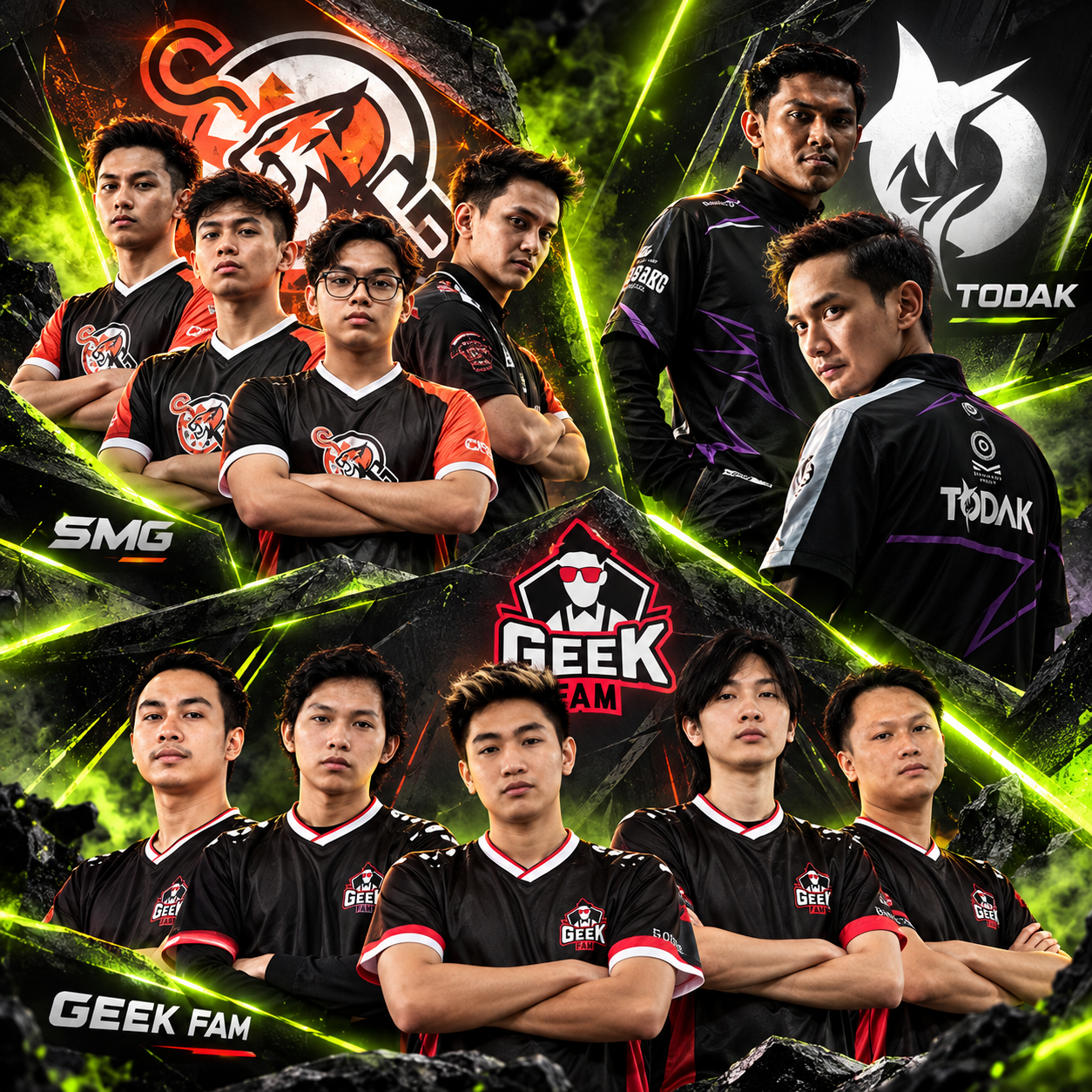
Team SMG (Sleeping Monster Gaming) represents Malaysia’s top Mobile Legends squad, winning the M3 World Championship in 2021 and claiming USD 300,000. The organization employs 12 full-time players, four coaches, and analysts who use performance data to refine strategies. Based in Cyberjaya, SMG operates a 5,000-square-foot training facility.
Todak emerged as Mobile Legends champions after securing MPL Malaysia Season 7. The team’s average player age is 22, with monthly salaries ranging from MYR 8,000 to MYR 25,000 depending on performance bonuses. Geek Fam excels in Dota 2, with roster members competing in Dota Pro Circuit events. Individual standouts include Yasuoki, a Valorant player who reached Radiant rank and now competes for Rex Regum Qeon. These professionals train 8-10 hours daily, combining gameplay sessions with physical fitness and mental coaching.
Esports Arenas, Communities, and Gaming Culture
KLCC hosts the Sanctuary Esports Arena, a 200-seat venue equipped with 144Hz monitors and fiber-optic connections offering 5ms latency. The facility charges MYR 15 per hour for casual play. Penang’s Esports Stadium opened in 2020 with capacity for 350 spectators, featuring a main stage, practice rooms, and broadcast studios.
Community growth occurs through 50+ esports cafes operating nationwide, providing affordable access at MYR 3-5 per hour. Online communities thrive on Discord servers with 100,000+ Malaysian members discussing strategies and organizing scrimmages. Cultural acceptance increased after mainstream media coverage: Astro Arena broadcasts weekly esports highlights, while local newspapers profile professional players. Universities formed 85 registered esports clubs, with UiTM’s club alone boasting 1,200 members. Corporate culture shifted as companies like Petronas and AirAsia sponsor teams, recognizing esports’ marketing value to audiences aged 18-34.
Mobile Esports in Malaysia
Mobile gaming accounts for 68% of Malaysia’s esports participation, driven by smartphone ownership exceeding 29 million devices. Mobile Legends Professional League Malaysia (MPL MY) runs three seasons annually, each distributing MYR 300,000 in prizes. The league’s accessibility—requiring only a smartphone and stable internet—removes barriers that PC gaming imposes.
PUBG Mobile National Championship attracted 12,000 registrations in 2023, with qualifiers held entirely online. The mobile format enables participation from rural areas in Sarawak and Kelantan, where PC infrastructure remains limited. Free Fire Open Malaysia targets casual players with lower skill floors, hosting monthly tournaments with MYR 50,000 prize pools. Mobile esports viewership peaks at 1.2 million concurrent streams during major finals, exceeding traditional sports broadcasts among viewers aged 18-25.
Esports Streaming and Online Platforms
Facebook Gaming leads Malaysian esports streaming with 4.5 million local gaming content followers. The platform’s integration with existing social networks and zero-rating agreements with Maxis provide free data for streams. Top Malaysian streamers like MiawAug generate MYR 40,000 monthly through subscriptions, donations, and sponsorships.
YouTube Gaming attracts 3.2 million Malaysian esports viewers monthly, with VOD content enabling flexible viewing. Twitch maintains a dedicated niche with 800,000 Malaysian users, primarily following international tournaments. Local platform Cube TV, launched in 2021, focuses exclusively on Southeast Asian content with Bahasa Malaysia commentary. Streaming monetization follows a tiered model: entry-level creators earn MYR 500 monthly from 1,000 subscribers, while top-tier personalities secure brand deals worth MYR 150,000 annually. Payment processing occurs through local e-wallets Touch ‘n Go and GrabPay.
Esports Regulation and Industry Support in Malaysia
The Malaysian Esports Federation operates under the Ministry of Youth and Sports, establishing tournament standards and player welfare guidelines. MESF requires tournament organizers to register events exceeding MYR 10,000 in prizes. The federation implemented anti-doping policies in 2020, prohibiting performance-enhancing substances.
The Malaysian Communications and Multimedia Commission (MCMC) oversees online platforms, mandating age verification for competitive gaming services. Tax regulations classify esports winnings as income, subject to standard rates after the first MYR 5,000 tax-free threshold. Government support includes the RM20 million Digital Content Fund announced in 2022, allocating resources for esports infrastructure and training programs. Licensing for esports betting remains prohibited under Malaysian law, with authorities blocking offshore platforms.
The Future of Esports in Malaysia
Projections indicate Malaysia’s esports market will reach USD 45 million by 2026, growing at 12% annually. This expansion depends on continued infrastructure investment: MDEC plans five additional regional esports hubs in Kota Kinabalu, Kuching, Ipoh, Johor Bahru, and Alor Setar.
5G rollout across Malaysia by end-2025 will reduce mobile gaming latency to under 20ms, enabling competitive play from any location. Educational institutions plan to expand esports programs: 15 universities will offer degree courses by 2025, covering game design, team management, and broadcast production. Regional integration through the ASEAN Esports Federation aims to standardize tournament formats and create a cross-border league with combined prize pools exceeding USD 5 million. Challenges remain: player burnout rates reach 40% among professionals competing year-round, prompting calls for mandatory off-seasons.
FAQ
What is e sport in Malaysia?
E sport in Malaysia refers to organized competitive video gaming recognized by the Ministry of Youth and Sports as a legitimate sporting discipline. The sector includes professional teams, government-backed tournaments with prize pools exceeding MYR 1 million, and infrastructure like dedicated arenas in Kuala Lumpur and Penang. Popular games include Mobile Legends, Dota 2, and PUBG Mobile, with over 15 million active participants nationwide. The Malaysian Esports Federation governs competitions and ensures compliance with age restrictions requiring participants to be 18 years or older.
How much can professional esports players earn in Malaysia?
Professional esports players in Malaysia earn MYR 8,000 to MYR 25,000 monthly through team salaries, with additional income from tournament winnings, streaming, and sponsorships. Top-tier players at Team SMG or Todak can earn MYR 300,000 annually when including prize money and brand deals. However, earnings vary significantly based on performance and game title, with no guaranteed income. Entry-level semi-professional players may earn MYR 3,000-5,000 monthly.
Which esports tournaments in Malaysia offer the largest prizes?
The Malaysia Esports League distributes MYR 1.2 million annually across eight game titles, making it the largest domestic competition. Mobile Legends Professional League Malaysia seasons offer MYR 300,000 per season with three seasons yearly. International qualifiers hosted in Malaysia feature prize pools up to MYR 500,000. Corporate-sponsored events like the Maxis eGG Championship contribute an additional MYR 150,000 per quarter.
Do I need special equipment to compete in e sport Malaysia?
Equipment requirements vary by game and competition level. Mobile esports like Mobile Legends or PUBG Mobile require only a smartphone (minimum MYR 600 for competitive models) and stable internet with 20-50ms latency. PC-based competitions for Dota 2 or Valorant need gaming computers costing MYR 3,000-5,000, monitors with 144Hz refresh rates, and peripherals totaling MYR 1,000. Most esports cafes and arenas provide equipment rental at MYR 15 per hour.
Is esports legal and regulated in Malaysia?
Yes, esports is legal and officially recognized in Malaysia through the Malaysian Esports Federation under the Ministry of Youth and Sports. The federation regulates tournaments exceeding MYR 10,000 in prizes, enforces anti-doping policies, and sets player welfare standards. The Malaysian Communications and Multimedia Commission requires age verification for competitive platforms, restricting participation to individuals 18 years and older. Esports betting remains prohibited under Malaysian law.
What age restrictions apply to esports in Malaysia?
Official esports competitions in Malaysia require participants to be 18 years or older for events involving prize money, as mandated by the Malaysian Esports Federation. Players aged 16-17 can compete in amateur leagues with parental consent, though prize eligibility remains restricted. Platform monetization through streaming requires age 18+ for payment processing. Casual gaming and non-prize tournaments accept younger players with parental supervision.